
Podiatry
Bunions, hammer toes and forefoot pain
What a bunion actually is, why the bump is usually not the part that hurts, and what conservative care can and cannot change before surgery is on the table.
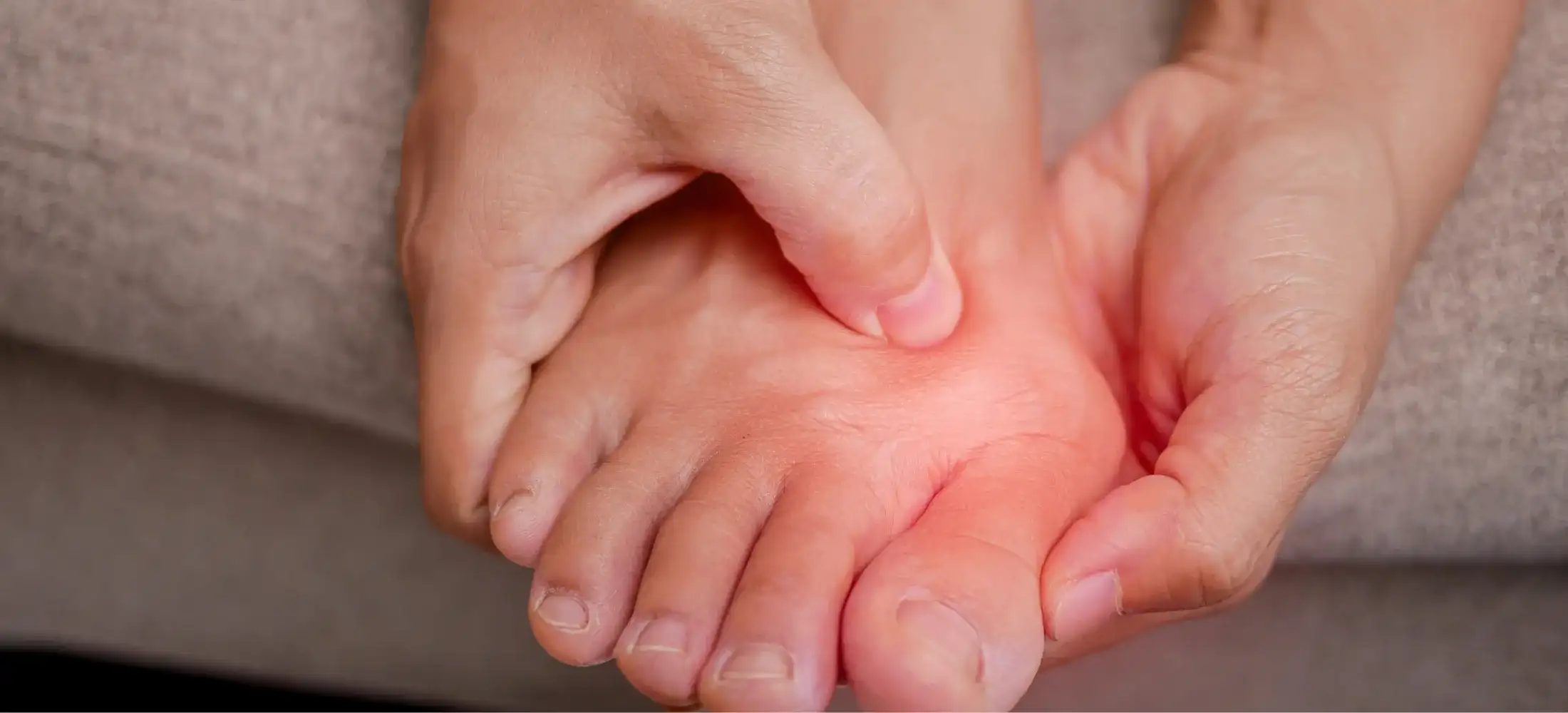
A bunion is not a growth on the side of the foot. It is the first toe joint changing position: the big toe drifts towards the second, the long bone behind it drifts the other way, and the joint between them ends up prominent. The bump people point at is that joint, seen from the outside.
That distinction matters, because it explains why the treatments aimed at the bump tend to disappoint, and why the pain is often somewhere else entirely.
Where the pain usually comes from
Plenty of people have visible bunions and no symptoms at all. When a bunion does hurt, it is generally one of four things rather than the bump itself:
- Pressure over the joint from a shoe that is narrower than the foot, which irritates the tissue over the prominence
- Load moving across the forefoot, as the big toe stops taking its share at push-off, the second and third metatarsal heads take more, and the ball of the foot becomes the sore part
- The second toe being crowded, which is how hammer toes and corns between the toes usually begin
- The joint itself becoming stiff and irritated, particularly where there is arthritic change alongside the deviation
Working out which of those is producing the pain is what decides the treatment, because they need different things.
Hammer, claw and mallet toes
Toes bend at their joints and stay there, usually because of the same forefoot mechanics that produce a bunion, or because they have been crowded for years. The distinction that matters clinically is whether the toe is still flexible or has become fixed.
A flexible toe can still be straightened passively, and responds well to props, splinting and footwear with depth over the toes. A fixed toe will not straighten, so the aim shifts to protecting it: a deep toe box so the knuckle is not rubbing on the shoe, silicone padding to spread pressure, and regular reduction of the corns that form on the knuckle and under the tip.
What conservative care changes, and what it does not
Being clear about this at the start is what stops people spending money on the wrong thing.
| Conservative care | Surgery | |
|---|---|---|
| Aims at | Pain, pressure and how the forefoot loads | The bone alignment itself |
| Changes the angle | No | Yes |
| Typical timeframe | Improvement over weeks | Recovery over months |
| Usual sequence | First | After conservative care has been given a fair run |
Footwear is the largest single lever, and the measurement that matters is width and depth across the front rather than the length. A foot held in the position that irritates the joint for ten hours a day will not be rescued by anything else on this list.
Padding and offloading takes pressure off the prominence, or off whichever metatarsal head has started taking more than its share.
Orthotic devices are worth considering where the assessment shows the forefoot is loading unevenly or the foot is rolling in through push-off. They manage load rather than correct the toe. See orthotics for what they do and when they are not needed.
Joint mobility and strength work keeps the big toe joint moving and the foot’s own muscles doing their job, which matters most where stiffness is part of the picture.
When surgery enters the conversation
Bunion surgery realigns the bone, and it works. It is also an operation, with a recovery measured in months, a period in a post-operative shoe or a CAM boot, and a real rehabilitation period afterwards. It is a good option for a painful bunion that has not settled with everything above, and a poor one for a bunion that simply looks wrong.
Where that is the sensible next step, your podiatrist will provide a detailed letter setting out the findings and the recommendation, including the surgeon best suited to what you have, so the consultation starts from an assessment rather than from scratch.
When to get it looked at sooner
Not urgently, but sooner rather than later: pain that has changed character or come on quickly, a second toe that has started to lift or cross over the big toe, a corn or callus that keeps returning in the same spot, or any break in the skin over the joint. If you have diabetes, that last one is not a wait-and-see, diabetic foot checks explains why the margins are narrower.
Forefoot pain has several causes that feel similar to each other. Burning or numbness between the third and fourth toes, or the sensation of standing on a folded sock, points at Morton’s neuroma rather than at the bunion you can see.