
Podiatry
CAM walker boots: what they do and how to get one right
Moon boots for foot and ankle injuries. Tall versus short, why the fitting matters more than the boot, and what to expect coming out of one.
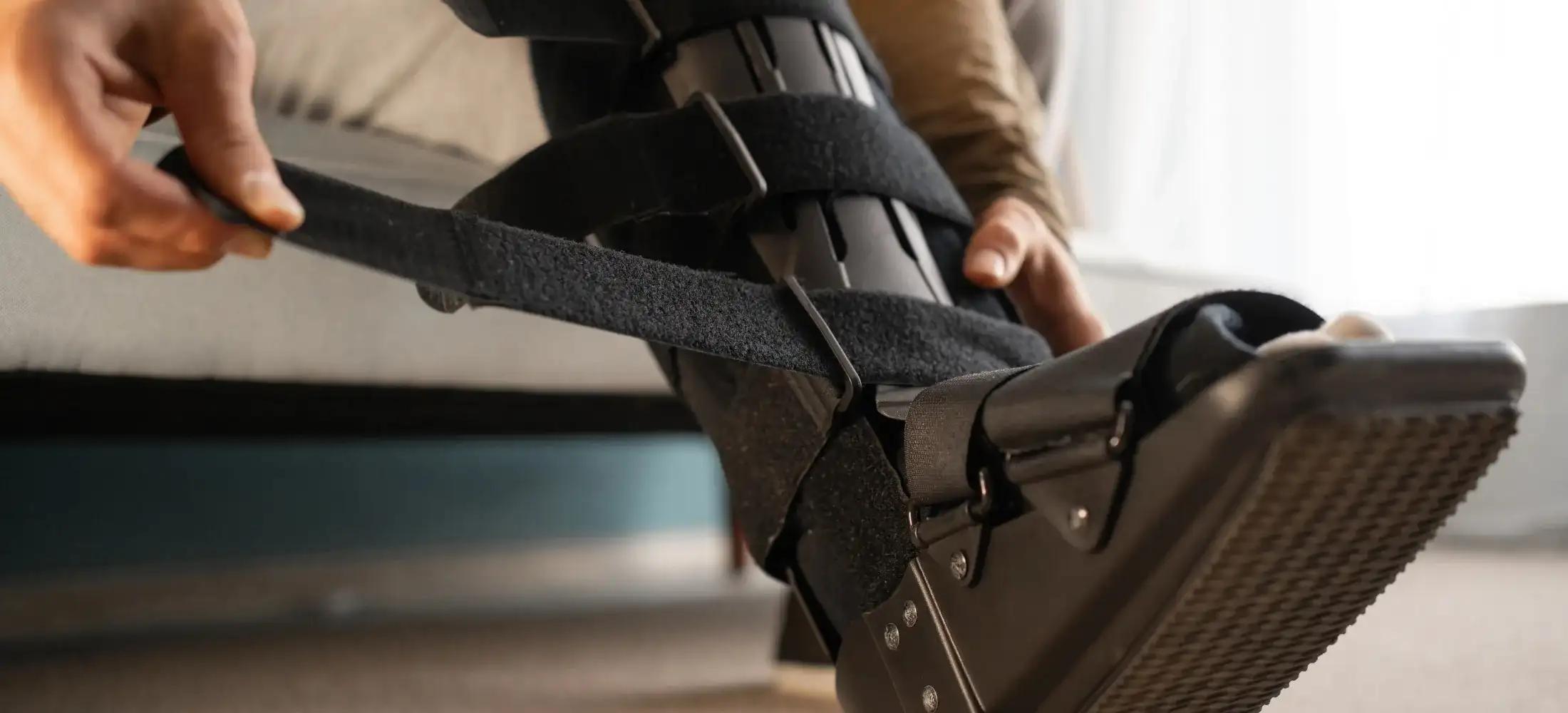
A CAM walker, a moon boot, is a removable boot that immobilises the foot and ankle to protect an injury while allowing you to walk. CAM stands for controlled ankle motion.
They are used for ankle fractures, some foot fractures, severe sprains, Achilles injuries, post-operative protection and stubborn cases of plantar fasciopathy. They are also one of the easiest things to get wrong when bought without being fitted.
Tall or short
The two heights are not interchangeable.
Tall reaches to just below the knee and controls the ankle as well as the foot. Used for ankle fractures, significant sprains, Achilles injuries and lower leg stress fractures.
Short stops above the ankle and controls the foot and forefoot. Used for metatarsal fractures, forefoot surgery and midfoot injuries.
Which you need is a clinical decision about where the injury is and what needs immobilising. Choosing between them yourself online is the single most common mistake people make, and a short boot on an ankle injury protects nothing.
The height problem nobody warns you about
A CAM walker is considerably taller than a shoe. Wear one for six weeks and you are walking with one leg effectively longer than the other, thousands of steps a day.
The consequences show up predictably: hip pain on the uninjured side, low back pain, and sometimes knee pain. People arrive having successfully healed the original injury and now with a new problem caused by the treatment.
The fix is straightforward and cheap, a levelling device fitted to the shoe on the other side, such as an EvenUp. Worth having from day one rather than after the ache starts.
Why the fitting matters
A fitting appointment sets several things that determine whether the boot does its job:
- Sizing. Too large and the foot moves inside it, which defeats the point. Too small and you get pressure areas.
- Strap tension and sequence. Straps do different jobs and the order matters.
- Heel wedging. Achilles injuries are often managed in a boot with heel wedges that are progressively removed as healing allows. This is a treatment protocol, not an accessory.
- Gait check. Watching you walk in it catches problems that are invisible standing still.
- Sock. A long seamless sock made for a moon boot prevents the rubbing and blistering that otherwise ends with people taking the boot off early.
At Brunswick Health the boot and the fitting are charged separately and both are listed on the fees page. The fitting claims on any extras policy that includes physiotherapy or podiatry.
Living in one
Sleeping. Whether you keep it on at night depends on the injury. Ask, because the answer differs. Achilles injuries often require it; many fractures do not.
Showering. Take it off unless told otherwise, and use a waterproof protector if there is a wound or cast underneath.
Skin. Check the skin daily, particularly if you have diabetes or reduced sensation. Pressure areas develop quietly.
Driving. Do not drive in a CAM walker on the right foot. Insurers take a dim view, and it genuinely impairs braking. On the left foot in an automatic, check with your insurer.
Calf wasting. Six weeks of reduced loading noticeably weakens the calf. That is expected, and it is why coming out of the boot is the start of rehabilitation rather than the end of treatment.
Clot risk. Immobilisation of the lower limb raises the risk of deep vein thrombosis. Calf pain, swelling, warmth or redness in the boot leg, and particularly breathlessness or chest pain, need urgent medical assessment.
Coming out of it
The transition matters more than people expect. Coming straight out of a boot into normal shoes and normal walking is how people re-injure.
Usually that means a graded transition, reducing wedges, then shorter periods out of the boot, then out of it entirely, followed by rehabilitation to rebuild calf strength, ankle range and balance. Expect that phase to take at least as long as the time spent in the boot.
Buying one
They can be bought at the clinic at 1/68 Melville Road, Brunswick West, with a fitting appointment at the same time. If you already have a boot and are not sure it is set up correctly, a fitting on its own is a reasonable thing to book, an incorrectly fitted boot is doing a job it was not designed for.