
Podiatry
Morton's neuroma
Burning, numbness or a pebble-under-the-foot feeling. What Morton's neuroma is, what settles it, and the forefoot problems it gets confused with.
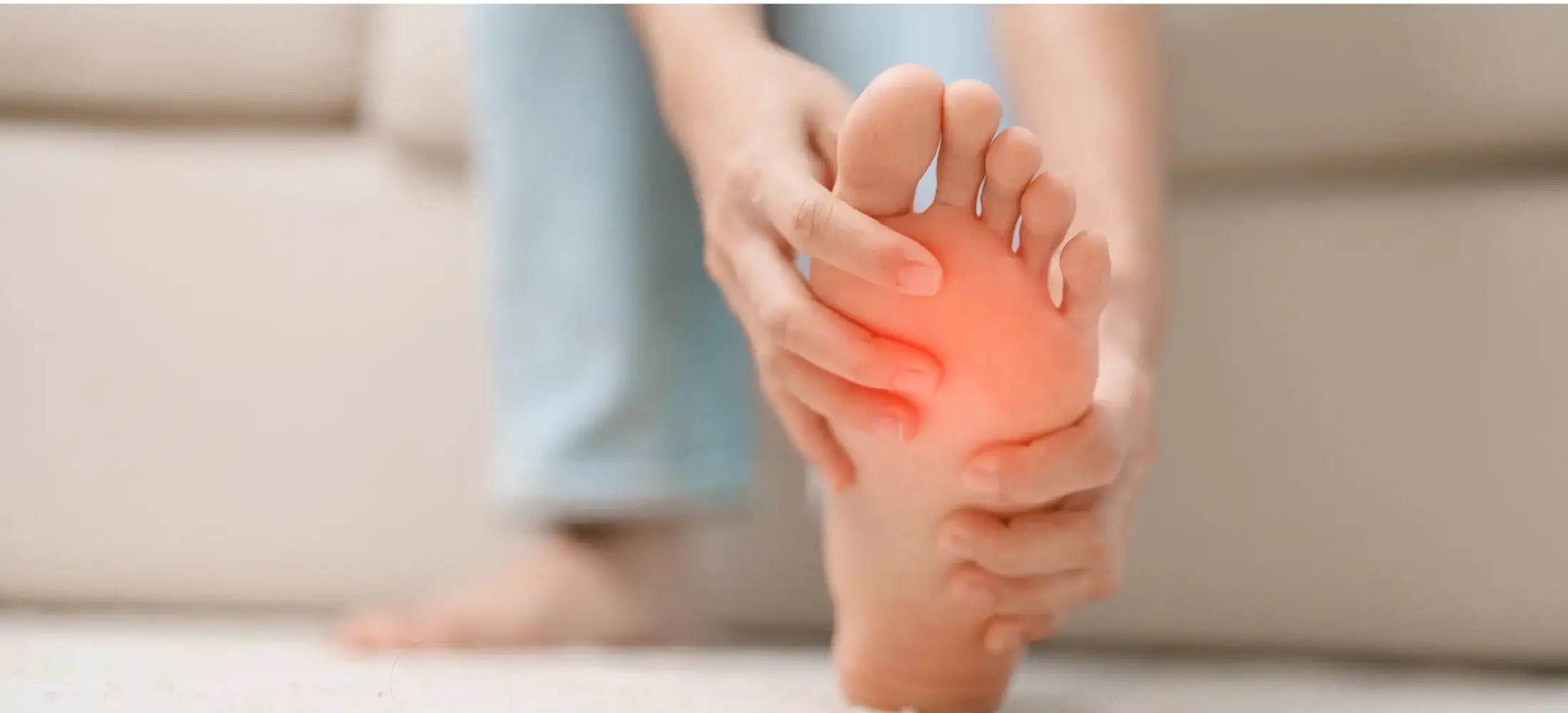
Morton’s neuroma produces one of the more distinctive descriptions in foot care: a burning pain in the ball of the foot that spreads into two toes, numbness alongside it, and the persistent sense of standing on a pebble that is not there. People often describe taking their shoe off mid-afternoon and rubbing the foot to settle it, which is close to diagnostic on its own.
What is actually happening
Between the long bones of the foot, small nerves run forward to supply the toes. Where two of those bones sit closest together, most often between the third and fourth, the nerve between them can be compressed repeatedly against the ligament that spans the gap.
The tissue around the nerve responds to that irritation by thickening. The thicker it gets, the less room it has, and the more it is compressed. That is the cycle, and it explains why the problem is one of space rather than of damage.
Two things reduce the space: shoes that squeeze the forefoot from the sides, and load that pushes the metatarsal heads together, which is why it turns up alongside bunions and other forefoot changes and in people who spend long periods on the balls of their feet.
What settles it
The treatments that work all do the same thing: give the nerve room.
Footwear. The single most effective change, and the first one worth making. Width across the front of the shoe, a toe box deep enough that the toes are not held down, and a low heel. A shoe you can spread your toes inside is the test.
Metatarsal padding. A dome placed just behind the metatarsal heads spreads them slightly and lifts the load off the space the nerve is running through. Small, cheap, and often the thing that changes the day.
Offloading and orthotic devices. Where the assessment shows load concentrating on one part of the forefoot, redistributing it takes the pressure off the irritated space. This is the more durable version of what the padding does.
Activity adjustment. Not stopping, reducing the specific loading that provokes it while the tissue settles, then rebuilding.
Injection. Where the measures above have not been enough, a corticosteroid injection can settle symptoms for a period. It treats the irritation rather than the cause, so it is most useful as room to get the rest working.
Surgery. Removing or releasing the nerve is an option for a neuroma that has not responded to any of the above. It resolves the pain in most cases and leaves permanent numbness in the affected toes, which is a trade most people accept only after conservative care has had a fair run. Where that is the sensible next step, your podiatrist will provide a detailed letter setting out the findings and the recommendation, including the surgeon best suited to it.
What else it might be
Several forefoot problems feel similar, and getting the wrong one wastes months.
| How it usually presents | |
|---|---|
| Morton’s neuroma | Burning and numbness into two toes, pebble sensation, worse in narrow shoes |
| Metatarsalgia | Aching under the ball of the foot generally, without the nerve symptoms |
| Capsulitis of a toe joint | Localised pain and swelling at one joint, often the second, with the toe starting to lift |
| A metatarsal stress fracture | Pain that builds with impact, tender to press on the bone itself, often after a training increase |
| Nerve pain referred from higher up | Symptoms spreading beyond the foot, or changing with back or leg position |
The distinctions come from where it hurts, what reproduces it and what the history says, which is what the first appointment is for. If foot and ankle pain has followed a jump in running or training load, sports injuries covers that side of it.
When to book
Worth assessing now rather than waiting: numbness that is becoming constant rather than coming and going, pain that has started limiting what shoes you can wear or how far you can walk, or symptoms that have not changed after a genuine trial of wider shoes.
The podiatry page has booking and fees are here.