
Podiatry
Orthotics, flat feet and high arches
What an orthotic device actually does, why a flat foot is not automatically a problem, and when a chemist insole would do the same job.
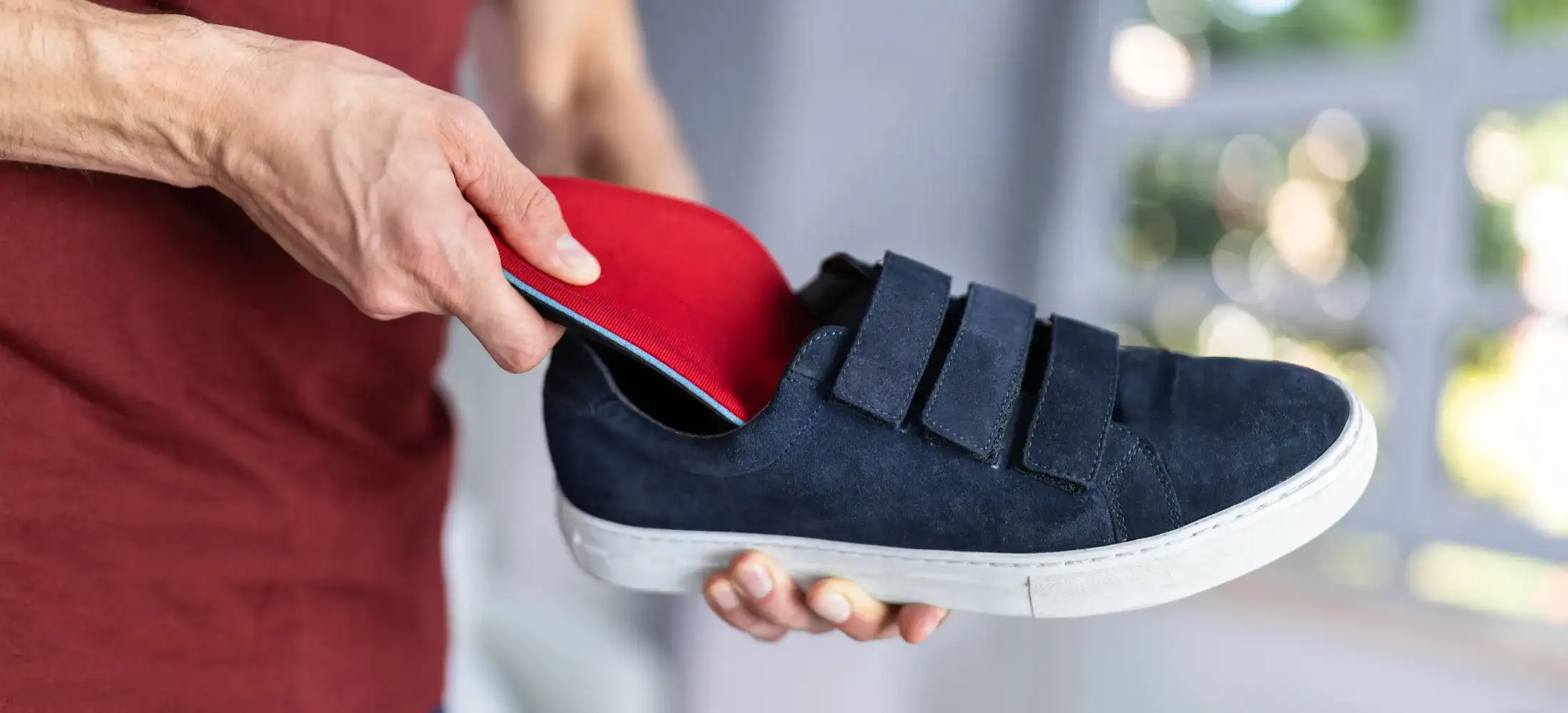
An orthotic device is a tool for changing where load goes through the foot. That is the whole of it. It is not a correction, it does not reshape a foot, and it is not something every foot needs, which is worth saying plainly, because orthotics are among the more heavily sold items in foot care.
A foot shape is not a diagnosis
Flat feet and high arches are both descriptions of a static shape, and neither predicts a problem on its own. Many people with very flat feet walk, run and stand all day without difficulty. Many people with high arches do the same.
What matters is how the foot behaves under load and whether that is producing symptoms:
- A foot that rolls in a long way and keeps rolling through the part of the step where it should be stiffening up to push off
- A high, rigid arch that does not spread load well, concentrating it on the heel and the ball of the foot
- Uneven pressure across the forefoot, where one metatarsal head takes more than its share and a callus builds over it
- A leg-length or alignment difference changing how the two sides load
An assessment looks at all of that: standing and walking, joint range, muscle strength, where the hard skin is, how the shoes have worn, and a foot scan where the picture warrants one. The result is a decision about whether a device changes anything worth changing.
What the different devices actually are
| Prefabricated | Semi-custom or modified | Custom | |
|---|---|---|---|
| Made to | An average foot, in sizes | A stock shell, adjusted to your foot | A scan of your own foot |
| Best for | Generic arch support, a first trial | A common problem needing one specific change | Uneven load, fixed deformity, a device that has to do several things |
| Cost | Lowest | Middle | Highest |
| Time | Off the shelf on the day | Usually same appointment | Made to prescription |
Starting at the cheap end is often the right call, and being told a prefabricated insole will probably do is a legitimate outcome of an assessment. Custom devices earn their cost where an average shape cannot do the job, a rigid deformity to accommodate, a specific area to offload, or a foot that has not responded to the simpler option.
Testing before buying
Low-dye taping is the standard way to find out whether arch support will help you, before anyone quotes for anything. The foot is taped to mimic what a device would do, and you go and use it normally for a few days. Relief is a good sign that a device will help; no change is a useful answer for the price of a roll of tape.
Where orthotics fit alongside everything else
An orthotic device manages load. It does not build capacity, and this is the most common reason one disappoints: fitted to a foot with heel pain and no loading programme alongside it, it offloads the tissue without doing anything about why the tissue could not cope. The two work together, the device buys the tissue some room while strength and load tolerance are rebuilt.
The same applies to footwear. A device sits inside a shoe and can only work with what the shoe gives it. Where the shoe is the problem, changing the shoe is the cheaper and better answer, and a device is not a substitute for it.
Gait and biomechanical assessment
Watching someone walk is not a formality. Foot posture standing still and foot behaviour in motion are different things, and the second is what produces symptoms, where the heel strikes, how far and how long the foot rolls in, whether the big toe joint extends enough to push off properly, what the knee and hip are doing above it.
That last point matters, because the foot is often not where the problem starts. Where the assessment shows load arriving badly because of what is happening further up the chain, physiotherapy works alongside podiatry here rather than at another clinic and another waiting list.
When to book
Worth assessing: pain that keeps coming back in the same spot, hard skin building in the same place, shoes wearing unevenly, feet that ache after a normal day on them, or a child avoiding activity or complaining consistently of sore legs.
Not worth a device on its own: a flat foot that does not hurt.
See fees and health funds for costs, or the podiatry page to book an assessment.