
Lab tests
Hair mineral testing for dogs and horses
A hair sample you cut at home and post in, analysed by mass spectrometry for 31 nutritional minerals, trace elements and heavy metals. The report comes to you by email, and it is written for your vet to read.
- No kit to wait for
- Collected at home
- 31 elements reported
- Report 3 to 4 weeks once we have it
What the analysis measures
This is a screening measurement rather than a diagnostic test, and your vet is the person qualified to say what a result means for your animal, who reads the report is answered in full below.
Hair takes up elements circulating in the body while it grows, so a sample cut close to the skin holds a record spread across weeks rather than the single moment a blood sample captures. Analysis is by mass spectrometry, and the animal report covers 31 elements in three groups:
- Nutritional elements (14)
- The minerals an animal builds with, each measured against a reference range for the species.
- Calcium, magnesium, sodium, potassium, phosphorus, iron, copper, zinc, manganese, chromium, selenium, sulphur, cobalt and molybdenum.
- Boron can be added at an additional charge. Ask for it before you order, an element cannot be added once the sample has been analysed.
- Additional elements (10)
- Elements with a smaller body of research behind them. A high reading is a prompt to look further rather than a finding on its own, which is one of the reasons the report goes to a vet.
- Lithium, nickel, vanadium, strontium, tin, tungsten, zirconium, barium, germanium and platinum.
- Toxic elements (7)
- No known biological function, and they compete with the nutritional elements for absorption and use.
- Mercury, lead, arsenic, cadmium, aluminium, beryllium and uranium.
- Antimony can be added for a further $50. Ask for it before you order, an element cannot be added once the sample has been analysed.
- Boron is the other element outside the standard animal profile, listed under nutritional elements above. Both it and antimony have to be requested before the sample is analysed, and both are charged on top of the listed price. Ask when you order.
The animal profile is slightly narrower than the human one, which covers 36. Some of these elements have well-established roles and reference ranges and others are reported because the instrument detects them, which is part of why the report needs a vet reading it rather than being read off.
Where an animal picks these things up
Dogs and horses meet more of their environment than we do, nose down, barefoot or shod, drinking from whatever is there. The everyday sources worth knowing about:
- Food and water, and what they are served in.
- Building materials, CCA-treated timber in older decking, fencing and stable construction, and lead-based paint in anything built before the 1970s.
- Pesticides, and paddocks or yards treated with them.
- Land with a history of industrial use, which can hold what was left behind long after the use stopped.
Diet and stress move mineral levels as well, which is part of why a reading is read against the whole picture rather than on its own, and why the person doing that reading is your vet.
Getting started, in four steps
Work through these in order. Payment is the last one, so nothing is spent before you have read what the test involves.
Three things complete an order
- 1. Your animal's hair sample, posted in
- 2. Your completed questionnaire
- 3. Your payment
The laboratory cannot begin until all three reach us. A sample that arrives without a questionnaire waits here, and nobody is chasing it — so please fill that in even if you have already paid.
Fill in the animal questionnairePrepare your animal's hair sample
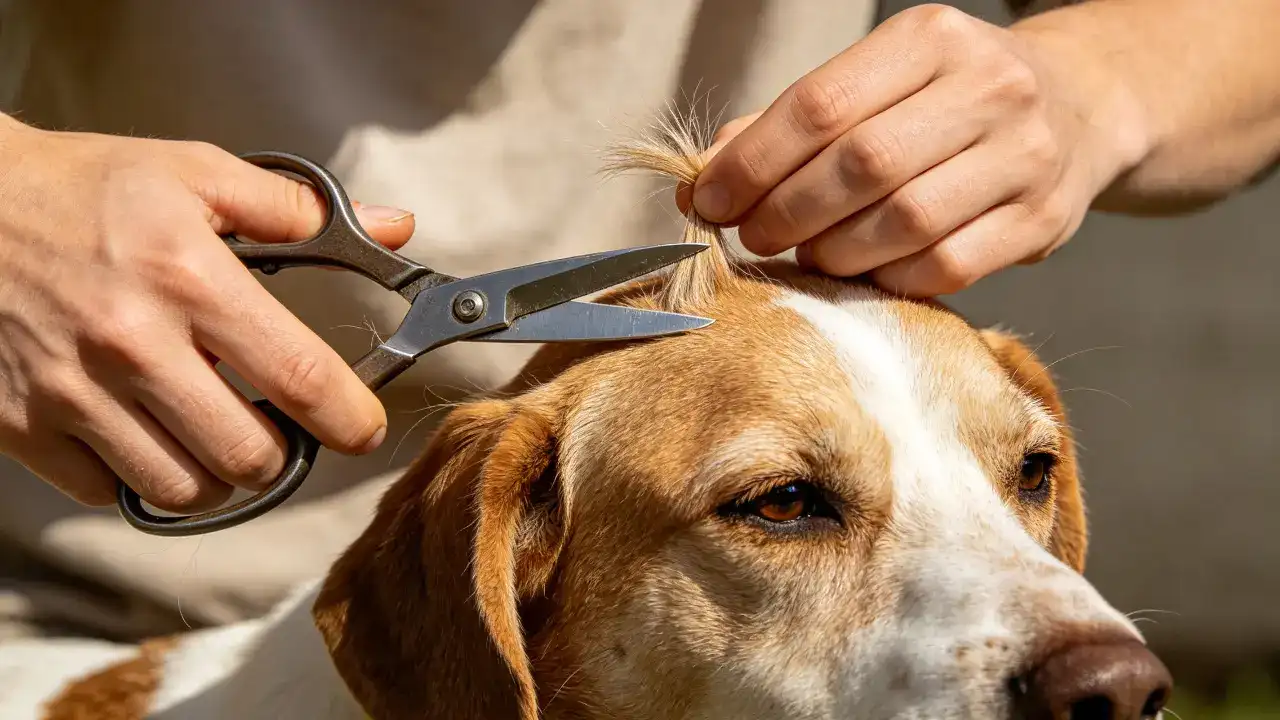
Nothing is posted out to you. There is no kit to order or wait for. Wash, rinse and dry the coat thoroughly first, then cut about a tablespoon of untreated hair with clean stainless steel scissors: from above and below the collar for a dog, from the lower mane for a horse. Keep the root end and discard anything past 4cm.
Send the hair sample
Seal it in a plain paper envelope labelled with your name and your animal's name, put that inside a second mailing envelope so nothing spills when the outer one is opened here, and post it to Brunswick Health Hair Mineral Testing, 1/68 Melville Road, Brunswick West VIC 3055. You are welcome to drop it at reception. The envelope can come in even though your animal cannot.
Complete the pet health questionnaire
Your animal's species, breed, age and sex, anything they are on including topical flea and tick treatments, and what prompted you to test. It takes a few minutes, and the laboratory reads the result against that history rather than against an average.
Finalise your submission
Payment is the last step, and the questionnaire takes you straight to it. You can also pay over the phone on (03) 9380 8099. Pay under the same name you put on the questionnaire, because that is how the two are matched: paying online gives you an order number, while a phone payment does not, and is recorded against the name on the sample rather than the person paying. Analysis begins once the sample, the questionnaire and the payment are all in, and the report is emailed to you 3 to 4 weeks from the day we receive the sample. Allow a few days for the post on top of that.
Collecting the sample
More tests are spoiled at this stage than at the laboratory, and all of it is avoidable. Wash, rinse and dry the coat thoroughly first, damp hair grows mould on the way to the laboratory, and cut from the back of the neck with clean high-grade stainless steel or plastic scissors, so the blades add nothing of their own.
From a dog
Several small sections from above and below the collar line, cut as close to the skin as you can get. Avoid any patch that has had a spot-on flea or tick treatment applied to it, and tell us on the questionnaire what they are on.
From a horse
Multiple sections from the lower part of the mane, again as close to the skin as you can get. Tail hair grows at a different rate, so the mane is the one to use.
- Keep the root end. Anything longer than 4cm goes in the bin — the growth further down the strand is measuring an older period, and mixing the two blurs both.
- About a tablespoon, which the laboratory puts at roughly half a gram. Err on the generous side; too little is the most common reason a report is delayed.
- A clean, new paper envelope, not recycled, not foil-lined, not plastic. No staples, which are metal sitting against the sample. Foil is the one that costs you time: aluminium is one of the elements measured, so a foil-wrapped sample reads falsely high and is rejected rather than analysed.
- Label it with your name and your animal's name, then seal it inside a second mailing envelope so nothing is lost when it is opened.
Having the report read
The report arrives as a set of values against reference ranges, with a graph. On its own it is data, and data of a kind that is easy to over-read: a raised number can mean an element is being cleared rather than accumulating, which is the opposite of how it looks at a glance.
Your vet is the person qualified to read it against what they know about your animal. The report is yours, so you are free to take it to whichever vet you choose, and there is nothing to arrange with us first.
Costs and cancellation
Current pricing is in the shop. The report is emailed as standard; a printed copy can be posted for an extra fee on request, and boron and antimony can each be added to the profile for a separate laboratory fee. Ask for any of those before you order, an element cannot be added once the sample has been analysed.
Cancellations before laboratory analysis begins attract a 20% administration fee. Once analysis has started the test cannot be refunded, because the laboratory's cost has already been incurred. If you are not sure this is the right test for your question, ask before you order.
Questions
Testing a dog or a horse, common questions
Collecting from each animal, what the profile covers, turnaround, who reads the report and the cancellation terms.
Can I have my dog or horse's hair analysed?
Yes. The same laboratory that runs the human analysis runs an animal profile for dogs and horses, from a sample you cut at home and post in. It measures 31 elements, nutritional minerals, additional elements and toxic ones including lead, mercury, arsenic and cadmium. There is no kit to wait for, and the collection instructions are on this page.
Who reads my animal's report?
Your vet. Brunswick Health cannot give veterinary advice or interpret an animal's results, diagnosing and treating animals is restricted to registered veterinary practitioners. The report is emailed to you and it is yours to take to whichever vet you choose. Tell them beforehand that you are ordering it, so it arrives as something they were expecting rather than something they have to make sense of cold.
Is this a diagnostic test for my animal?
No. It is a screening measurement, the same as the human version. It measures what is in the sample, and what that means for your animal is a question for your vet. If your animal is unwell, or you think they have got into something, that is a call to the vet today rather than a hair result next month. Brunswick Health cannot diagnose, treat or advise on an animal, because under Victoria's Veterinary Practice Act that is work for a registered veterinary practitioner.
How do I collect a hair sample from a dog?
Cut several small sections from above and below the collar line with clean stainless steel scissors, as close to the skin as you can get, avoiding any patch that has had a spot-on flea or tick treatment applied to it. Keep the root end and discard anything longer than 4cm. You need about a tablespoon, which the laboratory puts at roughly half a gram. The coat must be clean, untreated, thoroughly rinsed and completely dry before you cut, because damp hair grows mould in transit.
How do I collect a hair sample from a horse?
Cut multiple sections from the lower part of the mane with clean stainless steel scissors, as close to the skin as you can get. Keep the root end and discard anything past 4cm, and collect about a tablespoon, which the laboratory puts at roughly half a gram. The mane needs to be clean, untreated, thoroughly rinsed and completely dry. A damp sample can grow mould before it reaches the laboratory.
What does the animal profile measure?
31 elements. Fourteen nutritional, calcium, magnesium, sodium, potassium, phosphorus, iron, copper, zinc, manganese, chromium, selenium, sulphur, cobalt and molybdenum. Ten additional elements. And seven toxic ones: mercury, lead, arsenic, cadmium, aluminium, beryllium and uranium. Two more sit outside that standard profile, boron and antimony, and either can be added at a fee the laboratory charges separately, requested before the sample is analysed. The animal profile is slightly narrower than the human one, which covers 36.
How long does an animal's hair analysis take?
The report is emailed 3 to 4 weeks from the day we receive the sample, so allow a few days for the post on top of that. Analysis starts once the sample, the pet health questionnaire and the payment are all in, those are steps one to four, in that order, and nothing is posted out to you first.
Can I bring my dog into the clinic with the sample?
You are welcome to drop a sample at reception, and the envelope is all that needs to come in, animals cannot enter the clinic, which is a health regulation for a premises where people are treated. Posting it works exactly as well: Brunswick Health Hair Mineral Testing, 1/68 Melville Road, Brunswick West VIC 3055.
Can you test a cat, or another kind of animal?
The laboratory's animal profile covers dogs and horses. If you have another animal, call the clinic on (03) 9380 8099 before ordering and we will tell you where it stands rather than have you pay for something that cannot be run.
Can I cancel a pet hair mineral test after ordering?
Yes, before laboratory analysis begins, a 20% administration fee applies at that stage. Once the laboratory has started, the test cannot be refunded, because the work and the laboratory's cost have already been incurred. If you are not sure this is the right test for your question, ask before you order rather than after.
Bookings
Start your animal's hair mineral test
Cut the sample, post it in, fill in the questionnaire, then pay. Nothing is posted out to you, and the report comes to you by email for your vet to read.