
Podiatry
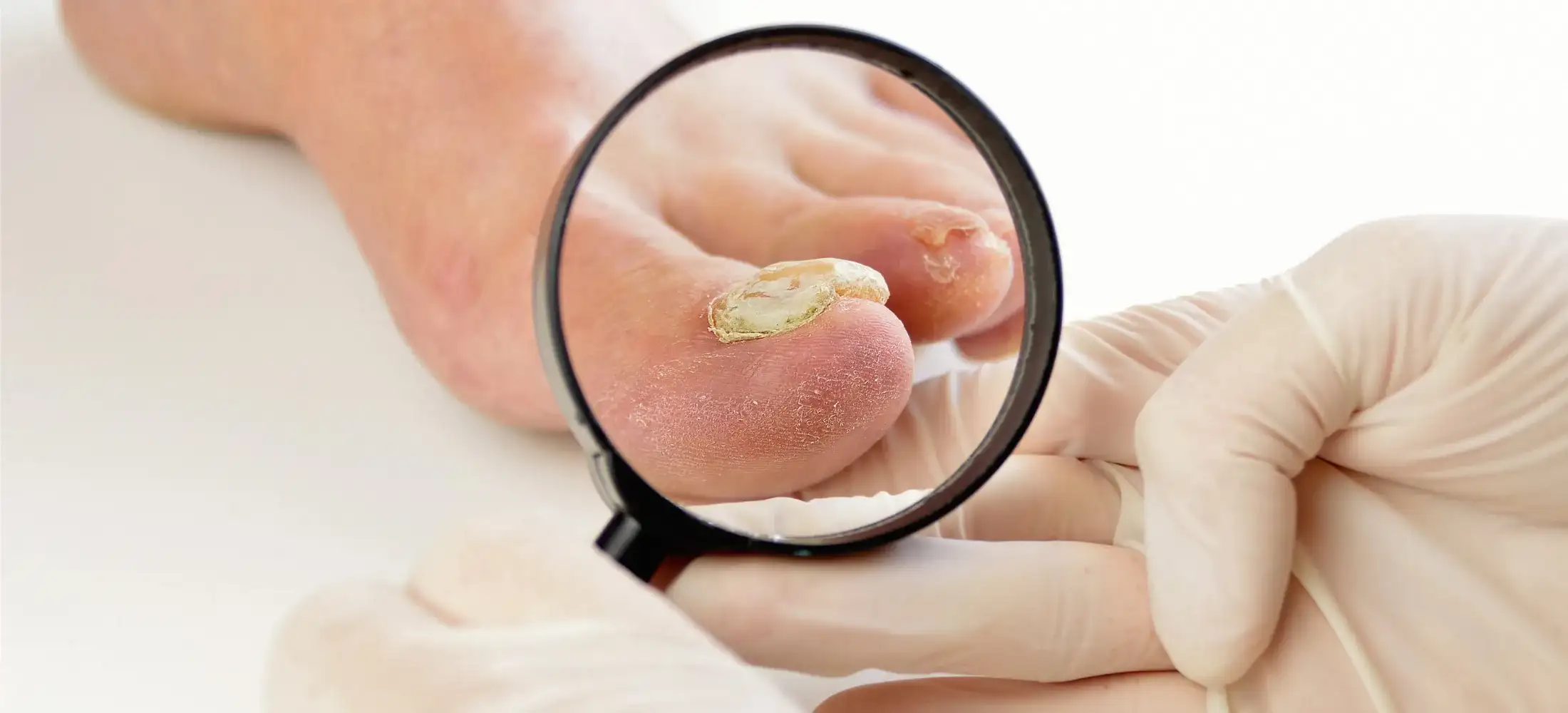
Thickened, fungal and painful toenails
Why a thickened or discoloured toenail is often not fungal at all, what clears the ones that are, and why the timeline is measured in the speed a toenail grows.
A toenail that has gone thick, yellow, brittle or crumbly is one of the most common reasons people book a podiatry appointment, and one of the most commonly self-treated things in the chemist. The self-treatment usually fails, and the reason is nearly always the same: the nail was never fungal in the first place, or it was fungal and the treatment stopped months before the nail had grown out.
The first question is whether it is fungal at all
Several different problems produce a thick, discoloured nail, and they look enough alike that guessing is genuinely difficult:
- A fungal infection (onychomycosis), which usually starts at the free edge or the side and works back towards the base
- An old injury, a nail crushed once, by a dropped weight or years of a shoe that was half a size short, can grow thickened and ridged from then on
- Psoriasis or another skin condition, which can pit, lift or discolour a nail
- Pressure from footwear, particularly on a second toe that is longer than the big toe
They are managed differently, so the assessment comes first. Where the picture is not clear, the nail can be sampled and sent for laboratory confirmation rather than treated on appearance.
What treatment involves
Reducing the nail. Thick nails are cut back and thinned with a drill. This is not cosmetic, a thinner nail hurts less in a shoe, and it lets any topical treatment reach the nail bed instead of sitting on four layers of dead keratin. On its own it makes the foot considerably more comfortable, which is why plenty of people book it as ongoing maintenance without pursuing the infection at all.
Topical antifungals. Applied to a nail that has been properly thinned first, and continued for the full length of the nail’s regrowth. They work best on infections caught early, in a nail that is not yet badly involved.
Prescription antifungals. Oral antifungal medication is prescribed rather than dispensed here. Where it is the sensible next step, a badly involved nail, several nails at once, or a topical course that has not shifted it. Your podiatrist will provide a letter setting out the findings and the recommendation, so the conversation with a prescriber starts from an assessment rather than from scratch.
Treating the skin as well as the nail. Fungal nail infections and tinea between the toes travel together. Treating the nail while leaving the skin reinfects the nail, which is one of the more common reasons a course that should have worked did not.
Why the timeline is what it is
Nothing regrows a damaged nail. Treatment clears the infection so the new nail growing from the base comes through clean, and then you wait for it to reach the end of the toe. A big toenail takes roughly nine to twelve months to do that; smaller nails are faster.
This has a practical consequence worth knowing at the start: judge progress at the base of the nail, not the tip. Clear new growth pushing the damaged section forward is the treatment working, even though the nail still looks wrong for most of a year.
What to do about the shoes
The nail is the visible half of the problem and the environment is the other half. Shoes worn two days running never dry out fully. Synthetic socks worn all day hold moisture against the skin. Shared shower floors, swimming pools and gym changing rooms are where most of it is picked up in the first place.
None of that is glamorous advice, and it is the part that decides whether the nail stays clear after the treatment stops.
When a nail needs looking at sooner
A nail that is painful rather than just unsightly, one with pus or spreading redness around it, or a nail that is lifting after an injury is a different appointment and should not wait for a routine one. So is any nail problem at all if you have diabetes, reduced sensation and circulation change what a small infection can turn into, which is covered in diabetic foot checks.
If a nail keeps becoming infected at the edge because of its shape rather than an infection in the nail plate, that is an ingrown toenail, and the two ways to fix one are a separate decision worth making properly.