
Chiropractic
Mid-back and rib pain
Thoracic and rib joint pain, the band between the shoulder blades, the catch when you breathe in, why desk work is behind it, and what treatment involves.
The thoracic spine is the twelve vertebrae between the neck and the lower back, and it is the section people know least about until it hurts. It carries the ribs, which means each level has joints at the front and the back, and it is built for stability rather than for the range of movement the neck and low back have.
That design is why mid-back pain feels different. It is often a band of ache between or under the shoulder blades, and it can also arrive as something much sharper and more local, a catch that stops a deep breath.
What it usually feels like
- An ache or burning band between the shoulder blades, building through the day
- A sharp, well-localised catch beside the spine, often on one side
- Pain that bites on a deep breath, a cough, a sneeze or a laugh
- Stiffness turning to reverse the car, or reaching behind you
- Tightness across the front of the chest, which is the same problem felt from the other end
Why desk work features so heavily
Not because sitting is dangerous. The thoracic spine and the muscles around it are being asked to hold one position for hours, and tissue that is loaded without variation for long enough starts to complain. The tell is the pattern rather than any one symptom: fine first thing, building through the afternoon, worse by the end of the week, noticeably better after a few days away from it.
That also points at what changes it. Treatment settles the current episode; how often you change position is what decides whether it comes back.
Rib joint irritation, and why it can be alarming
The sharp version usually involves a rib joint rather than the spine itself. Those joints move with every breath, so an irritated one is loaded hundreds of times an hour whether you rest it or not, which is why it can feel disproportionate to whatever set it off, and why “I just turned over in bed” is a genuinely common history.
People are often told a rib has “gone out”. It has not. The joint is irritated and restricted and the muscles around it are guarding, which is what produces the pain and the feeling that something is stuck. Nothing is dislocated and nothing needs putting back.
Seek emergency medical care if
Chest and mid-back pain are not always mechanical, and a few presentations need care now rather than an appointment.
- Chest pain or tightness with breathlessness, sweating, nausea, or pain spreading into the jaw, neck or arm. Call 000. This can present differently in women, and mid-back pain can be part of it
- Sudden tearing or ripping pain between the shoulder blades
- Pain that followed a significant fall, crash or direct blow
- Fever, unexplained weight loss, or night pain that wakes you and settles in no position
- Progressive weakness or numbness, or any change in bladder or bowel control
- New pain with a history of cancer, osteoporosis or long-term steroid use
Any of these means an emergency department or 000 now, not an appointment. The practitioners here screen for all of them before treating.
What treatment involves
Assessment first: which movements provoke it, whether it is the spinal joints or a rib, whether the pain refers around the chest wall, and whether anything on the list above needs ruling out.
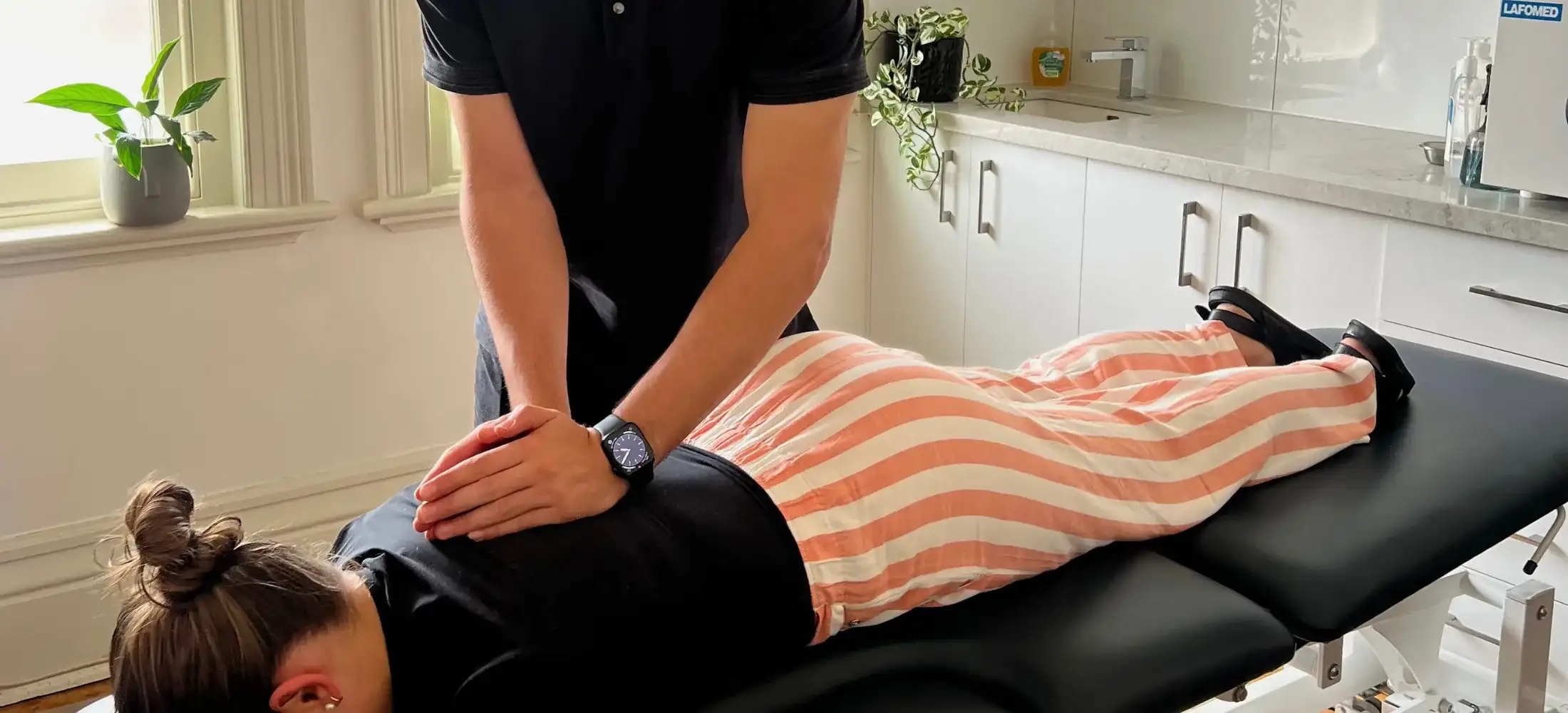
Treatment then usually combines joint techniques for the restricted segment with soft tissue work through the muscles that have been guarding it, and breathing and movement advice that stops the joint being reloaded the same way every hour. Where a tendon or muscle has become genuinely stubborn, dry needling or shockwave therapy are available here rather than by referral elsewhere.
Who you would see here for it
A mid-back problem can sit with more than one practitioner, and at Brunswick Health that is a conversation down the corridor rather than a new referral.
| If the picture is | Who usually leads |
|---|---|
| Joint restriction and rib irritation | Chiropractic |
| Strength and capacity. The tissue is not up to the load it is being given | Physiotherapy |
| Widespread muscular tension and postural fatigue | Remedial massage or myotherapy |
| Persistent tension with a stress or sleep component | Acupuncture |
You do not need to work out which one you need before booking. That is what the first appointment is for, and if it turns out to be someone else in the building you are told at the assessment rather than after a course of treatment.
How long it takes
Most uncomplicated episodes improve noticeably within a few weeks, and rib joint irritation often settles faster. You will be given an expected number of visits and a rough timeframe at the first appointment, along with the milestones to expect and when. Your progress is reviewed at each visit and the plan follows it.
Related reading: low back pain, neck and shoulder pain, and posture and desk-related pain.