
Chiropractic
Shoulder, hip and knee pain: what the assessment separates
Joint pain in a shoulder, hip or knee is rarely the joint alone. How referred pain is ruled out, and when it points somewhere else.
People book for a sore shoulder, a sore hip or a sore knee expecting the appointment to be about that joint. Often it is. Reasonably often it is not, and the first useful thing an assessment does is establish which situation you are in.
The pain is not always where the problem is
Joints and nerves refer pain in patterns that do not match how most people picture their anatomy.
Hip osteoarthritis classically presents as groin or outer thigh pain, and in a proportion of people it presents as knee pain with no hip symptoms at all. Lower back problems refer into the buttock and down the thigh, which is frequently mistaken for a hip problem. Neck problems refer into the shoulder blade and upper arm, which is frequently mistaken for a shoulder problem.
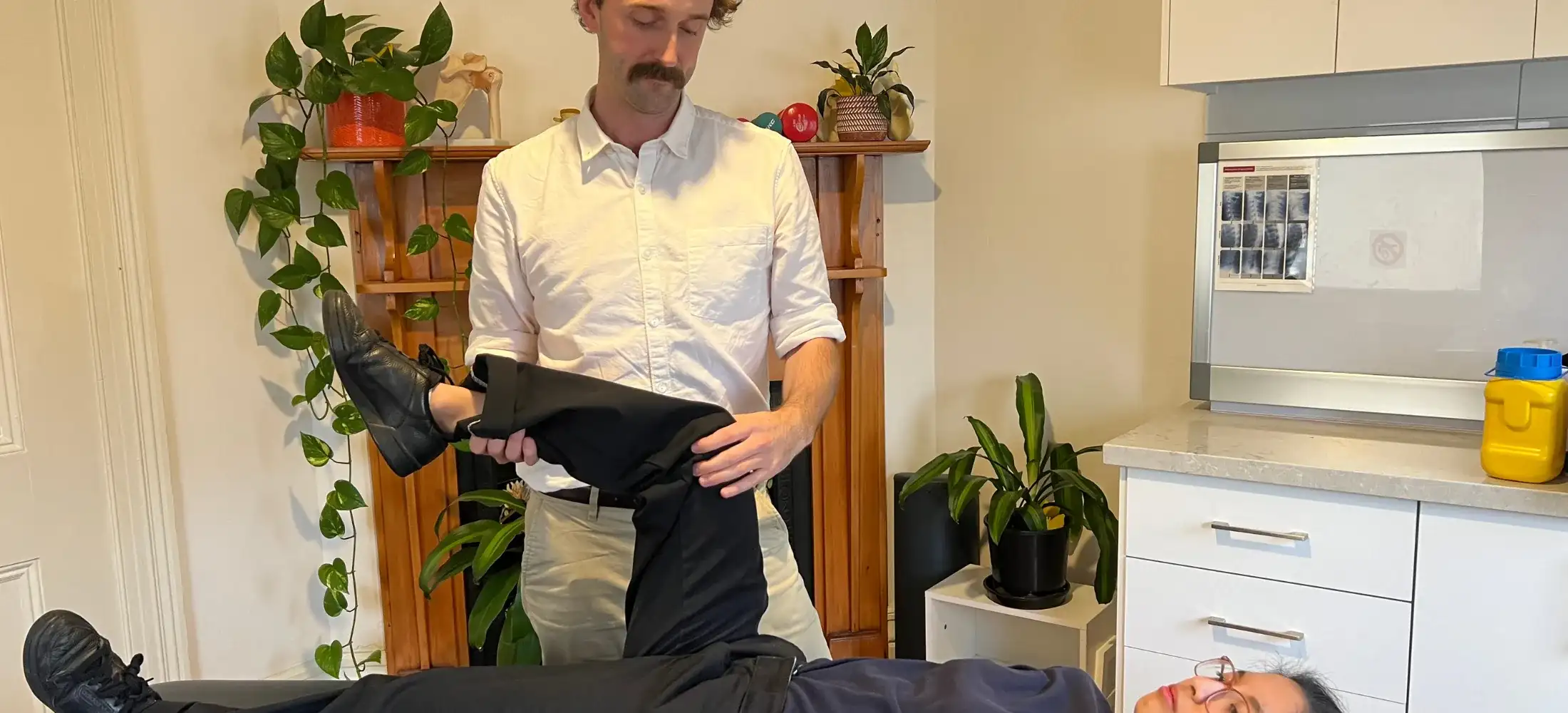
This is why a shoulder examination includes the neck, and why a knee that examines entirely normally prompts a look at the hip and lower back rather than a scan of the knee. Treating the painful area when the source is elsewhere is the most common reason joint treatment does not work.
Joint problem or tendon problem
Once the source is localised, the next split matters more than the diagnosis label, because it changes what treatment should mostly consist of.
Joint-driven pain, stiffness after rest, pain through a range of movement, discomfort that eases as you warm up, tends to respond well to manual therapy alongside movement. Hands-on treatment is a reasonable lead here.
Tendon-driven pain, rotator cuff at the shoulder, gluteal tendons at the outside of the hip, patellar or quadriceps tendon at the knee, behaves differently. It is load-related, it hurts on specific loaded tests rather than through the whole range, and it responds primarily to progressively loaded exercise. Manual therapy and shockwave therapy can help with symptoms, but the loading programme is what changes the tendon. A tendon problem managed with hands-on treatment alone will feel better and stay fragile.
Being told which of these you have, and therefore what will actually do the work, is a reasonable thing to expect from a first appointment.
Why scans mislead here more than almost anywhere
Rotator cuff tears are present on imaging in a large proportion of people over 60 who have no shoulder pain whatsoever. Meniscal tears are common findings in painless knees. Joint space narrowing appears in people who are walking around without complaint.
So a scan will find something, and being told you have a tear tends to reduce how much people use the limb, which for most shoulder and knee problems is the opposite of what helps.
Imaging is worth doing when the result would change what happens next: significant trauma, a joint that locks or gives way, suspected serious pathology, a surgical opinion under consideration, or symptoms that are not following the course they should be. Those are real thresholds and they get met. “I would like to see what is torn” is not one of them.
Signs that need medical assessment before treatment
- A joint that is hot, swollen and painful without a clear injury, especially with fever. That needs same-day medical assessment
- Inability to bear weight after an injury, or an obviously deformed joint
- A knee that locks, or a joint that gives way repeatedly
- Several joints becoming painful and swollen at the same time, with morning stiffness lasting over an hour. A pattern that can indicate inflammatory arthritis
- Unexplained weight loss, night pain that will not settle, or a history of cancer alongside new joint pain
The practitioners here are trained to spot these, and screen for them at every first appointment. Anything that isn’t on this list is exactly the sort of thing the practitioners here see every day.
What treatment involves
For most shoulder, hip and knee pain, some combination of the following.
Hands-on treatment of what testing implicated, the joint itself, the surrounding muscles, and the region referring into it where that applies.
Loading, progressed deliberately. This is the part that changes capacity rather than just symptoms, and it is where most of the improvement comes from in tendon-related problems. It has to be uncomfortable enough to drive adaptation and controlled enough not to flare, which is why it is prescribed and reviewed rather than handed over as a sheet.
Adjusting what provoked it. Training volume that climbed too fast, a job that changed, a return to sport after a lay-off, or a new desk. Something usually changed shortly before the pain started, and finding it is often more useful than any individual technique.
Making sure you see the right practitioner
Chiropractic scope covers the joints and muscles of the whole body, so shoulders, hips and knees are legitimately within it. Being able to treat something is not the same as being the best-placed person to lead it, and there are clear cases where the answer sits elsewhere:
- Tendon problems where the main intervention is a months-long loading programme are usually better led by physiotherapy
- Foot and ankle mechanics driving knee pain, and anything needing orthotics or nail care, belong with podiatry
- Suspected inflammatory arthritis, infection or fracture is a medical diagnosis, not an allied health one
- A joint that has reached the point of a surgical conversation needs a specialist opinion, and delaying that with a further course of conservative care serves nobody
All three professions work in this building, so being redirected is a conversation rather than a new referral and another waiting list.