
Physiotherapy
Runner's knee: pain at the front of the knee
Patellofemoral pain, aching at the front of the knee, worse on stairs and after sitting. Why strength matters more than stretching.
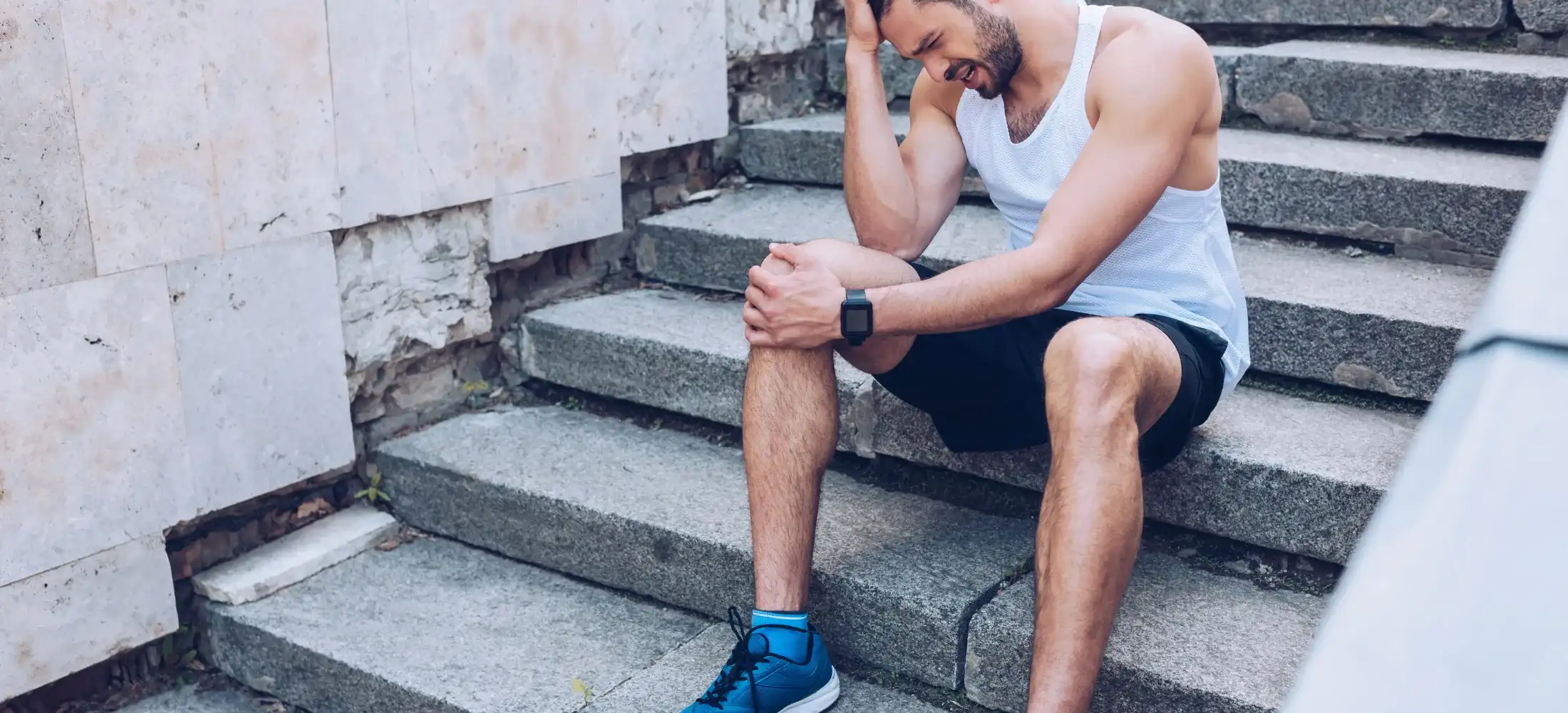
“Runner’s knee” usually means patellofemoral pain: an ache at the front of the knee, around or behind the kneecap, that is worse going downstairs, on hills, when squatting, and after sitting with the knee bent for a while.
It is the most common running injury there is, and it is not confined to runners. Cyclists, walkers and people who sit at a desk all day get it too.
What is actually happening
The kneecap sits in a groove at the end of the thigh bone and slides through it as the knee bends and straightens. Patellofemoral pain arises when the load across that joint exceeds what the tissue is currently able to tolerate.
That is deliberately broad, because the older explanations have not held up well. Kneecaps that “track badly” are common in people with no pain. Cartilage changes on a scan correlate poorly with symptoms. What correlates reasonably well is load, how much, how suddenly it changed, and how much capacity the surrounding muscle has to manage it.
Why the pain is worse in those specific situations
The load across the patellofemoral joint rises sharply as the knee bends under weight. Walking on the flat puts perhaps half your body weight through it. Descending stairs can put through several times that.
The same principle explains the sitting. A bent knee holds the kneecap compressed against the groove; hold it there through a two-hour meeting and it complains when you stand.
What causes it
- A change in load. More running, more hills, more speed work, or a return after a break at the level you stopped at.
- Hip and thigh strength. Weakness in the glutes and quadriceps changes how the leg controls itself under load. Hip strength in particular matters more than most people expect for a knee problem.
- Running form. Overstriding and a low step rate both increase the load per step. Increasing cadence by 5–10% is one of the few form changes with reasonable evidence behind it.
- A change in surface or footwear.
- Foot mechanics. Sometimes relevant, often over-blamed. Worth assessing rather than assuming.
What helps
Strength, particularly hips and quadriceps. This is the most consistently supported treatment. Squats, step-downs, split squats, hip abduction work, loaded properly and progressed over months. Being able to do the exercise is not the goal; being able to do it under meaningful load is.
Load management. Reduce running to a volume that does not aggravate it, rather than stopping. Cross-training that does not load the joint in deep flexion, cycling with a high saddle, swimming, walking on the flat, maintains fitness while capacity rebuilds.
Running changes. A slightly higher cadence, avoiding steep downhills for a while, flattening the route. Small changes to the thing that provokes it are usually worth more than any treatment applied afterwards.
Hands-on treatment and taping. Useful for symptom relief in the early phase, which matters because pain limits how much loading you can do. On their own, they do not change the outcome.
What to skip
Stretching alone. A tight iliotibial band and tight quadriceps often accompany patellofemoral pain, and stretching them makes the knee feel briefly better without addressing why the load exceeded capacity.
Rest alone, for the same reason as every other overuse problem, six weeks off returns you to the same running with less capacity than you started with.
Arthroscopy for uncomplicated patellofemoral pain. The evidence does not support it.
How long it takes
Six weeks to three months for most cases, provided the strength work is done consistently and the running is managed rather than either stopped or continued unchanged. Longer where the pain has been present for a year or more.
What else causes pain around the kneecap
Several things present similarly, and sorting out which one you have is what the first appointment is for:
- Patellar tendinopathy, pain localised to the tendon just below the kneecap, worse with jumping and landing, tender to press on one specific spot
- Fat pad irritation, pain just below and either side of the kneecap, worse with the knee straight and locked out
- Meniscal or ligament injury, usually a clear moment of injury, often with swelling, catching or giving way
- Referred pain from the hip, particularly in children and adolescents, where hip pathology presenting as knee pain is a well-known trap
Swelling, locking, giving way or a clear injury moment all point away from a straightforward overuse problem and are worth having assessed rather than managing yourself.