
Physiotherapy
Osteoporosis: what protects bone, and how to exercise
Bone density falls with age and faster after menopause. What the evidence says about resistance training, impact and balance work, and when to get a scan.
Osteoporosis is a condition of reduced bone density and altered bone structure that makes fractures more likely. It is common, largely silent until something breaks, and considerably more modifiable than most people assume.
Around two thirds of Australians over 50 have osteoporosis or osteopenia. Most do not know it.
Why it happens
Bone is living tissue, constantly being broken down and rebuilt. Until about the age of 30 you build more than you lose. After that the balance gradually reverses.
For women, the reversal accelerates sharply at menopause. Oestrogen restrains bone breakdown, and in the years around and after menopause women can lose bone at several times the background rate. This is why the risk profile differs so much between the sexes, and why the years around menopause are the highest-leverage time to act.
Other contributors: family history, low body weight, smoking, high alcohol intake, long-term corticosteroid use, low calcium or vitamin D, some medical conditions, and — importantly for this article — a lack of loading.
The bone-loading principle
Bone adapts to the loads placed on it. Loads that are high in magnitude, applied rapidly, and varied in direction stimulate bone formation. Loads that are low and repetitive do not do much.
Two consequences follow, and both surprise people:
Walking is good for you and does relatively little for bone density. It is low magnitude and highly repetitive — bone stops responding to a load it has seen a million times. Walking is worth doing for a dozen other reasons; it is not an osteoporosis programme.
Swimming and cycling do essentially nothing for bone. Excellent cardiovascular exercise, non-weight-bearing, no meaningful loading stimulus.
What the evidence supports
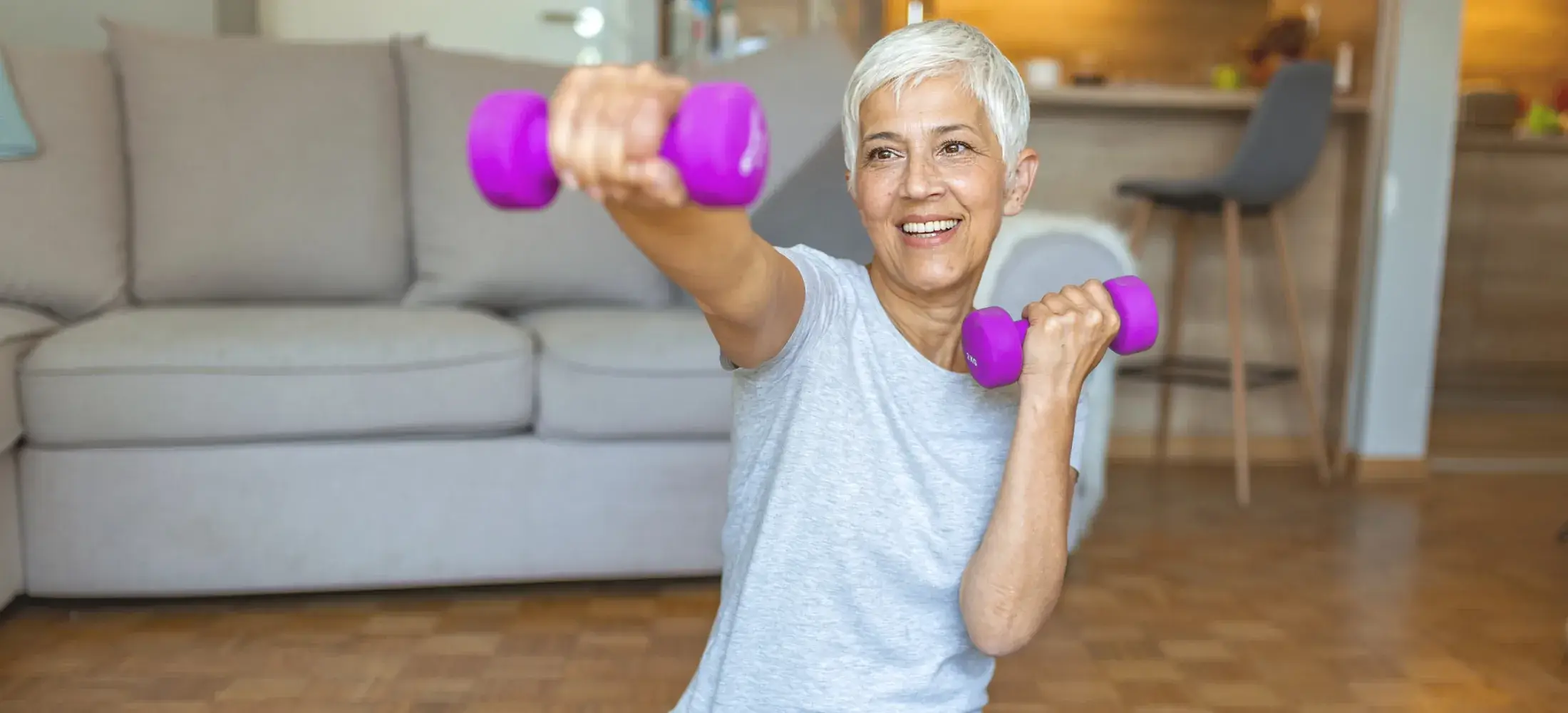
Progressive resistance training, at genuine load. This is the strongest evidence there is. Trials of high-intensity resistance and impact training in postmenopausal women with low bone mass have shown improvements in bone density at the spine and hip — a group who had been told for years to avoid heavy lifting.
The key word is progressive. Light weights for high repetitions do not provide the stimulus. It has to get heavier over time.
Impact loading. Jumping, hopping, bounding — high-magnitude, rapidly applied, multidirectional. Appropriate for many people and needs to be scaled carefully where fracture risk is already high.
Balance and falls prevention. Since almost all osteoporotic fractures happen because someone falls, reducing falls does at least as much for fracture risk as changing density does. Balance training, lower limb strength and a medication review with your GP all count.
Calcium and vitamin D. Necessary but not sufficient. They support bone formation; they do not provide the stimulus for it.
What to be careful with
The older advice to avoid all bending and lifting has been walked back — it left people weak, and weakness is itself a fracture risk. The current position is more precise:
Loaded end-range spinal flexion — heavily loaded forward bending and twisting — carries genuine vertebral fracture risk in established osteoporosis. Toe-touching with weights, loaded sit-ups, aggressive rotation.
Uncontrolled or unsupervised high-impact work where fracture risk is already high.
Nothing at all, which is the option most people default to and the one that guarantees continued decline.
If you have diagnosed osteoporosis, exercise should be programmed rather than improvised — which is the argument for having it set up by someone who can see your scan results.
When to get a scan
A bone density scan — DXA — is the diagnostic test, arranged by your GP. Medicare rebates apply in defined circumstances, including:
- Age 70 and over
- A fracture from minimal trauma, such as falling from standing height
- Long-term corticosteroid use
- Certain medical conditions affecting bone
Worth raising with us or your GP if you have a parental history of hip fracture, early menopause, have lost height, or have broken a bone from a minor fall.
Where a clinic fits
Physiotherapy has a defined role here: assessing current strength, balance and movement capacity, and building a progressive loading programme appropriate to your bone density and fracture history. That is a different exercise prescription from a general gym programme, and the difference matters most for the people at highest risk.
Diagnosis, scanning and medication sit with your GP, and we’ll refer you where a scan or a medication review is the right next step. What happens here is the loading side — and given how strong the evidence for resistance training has become, that is not a minor part of the picture.